Practical sky guides for calm, confident stargazing.
Learn constellations, seasonal patterns, and observation basics through clear notes designed for beginners and curious regulars alike.
Start with the basics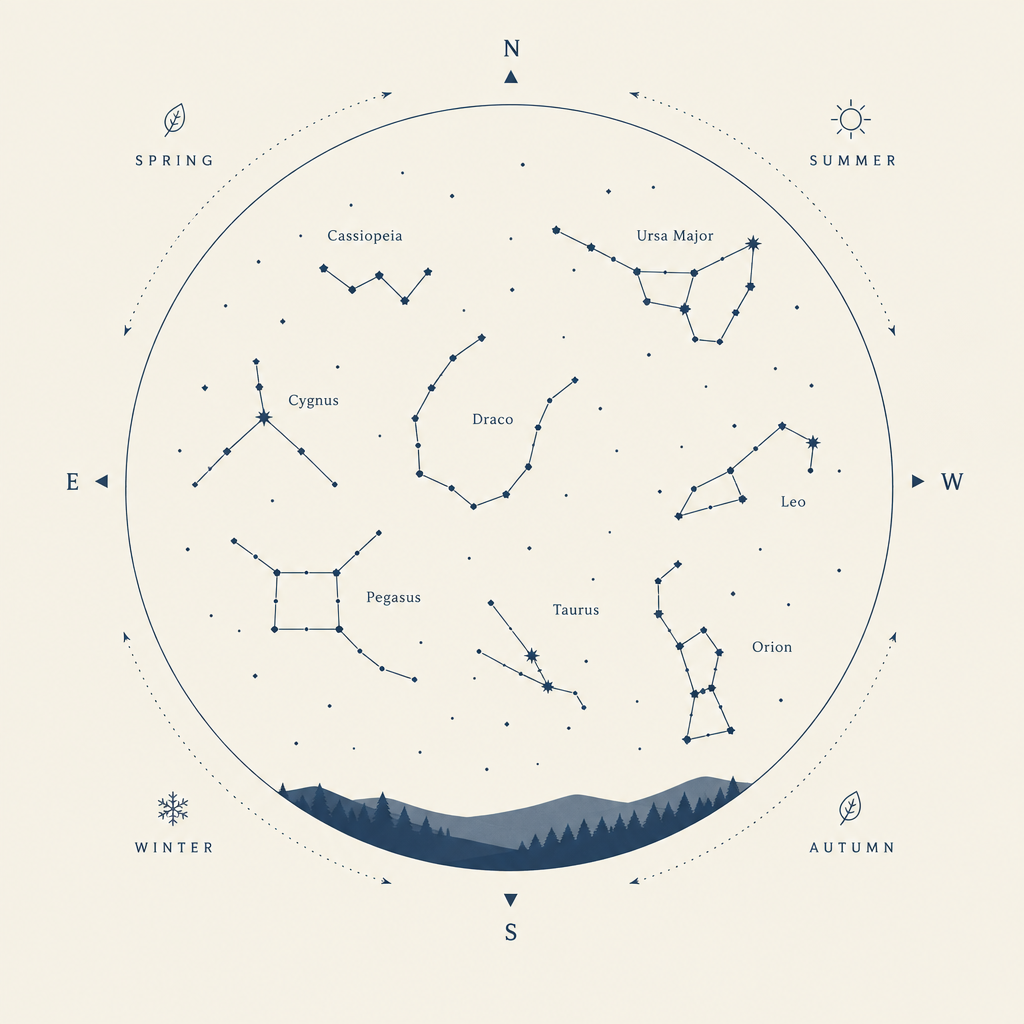
Guides
Constellation and night-sky starters
Browse six beginner-friendly topics to help you read the sky with confidence before your next meetup.
Recognizable constellations
Start with easy patterns like Orion, Cassiopeia, and the Big Dipper.
Seasonal sky orientation
Learn where to look in spring, summer, autumn, and winter evenings.
Planet spotting basics
Tell planets from stars by their steady light and sky path.
Moon phases at a glance
Follow the lunar cycle to choose brighter or darker observing nights.
Binocular observing
Use simple binocular techniques to reveal clusters and lunar detail.
First-night setup checklist
Prepare layers, red light, and timing for a smooth first observing session.
Beginner support
Stargazing FAQ
Short, practical answers for first-time visitors so you can arrive relaxed and ready to enjoy the sky.
Do I need a telescope to join a meetup?
No telescope is required. Many members start with binoculars or just their eyes, and shared scopes are often available for guided viewing.
What happens if the sky is cloudy?
We usually continue with a shorter indoor-style session: sky maps, constellation planning, and question time. If weather is severe, updates are posted before start time.
What should beginners bring to their first night?
Dress warmly in layers, bring water, and use a dim red flashlight if you have one. A notebook is helpful for observation notes, but not required.
Are children and complete newcomers welcome?
Yes. The group is beginner-friendly and community-led. Families are welcome, and first-time visitors are always guided through the evening pace.
When do meetings usually happen?
Most meetups are held in the early evening on clear weekends, with times adjusted seasonally. Confirmed schedules are listed in announcements.
What can I see with the naked eye?
On many nights you can spot major constellations, bright planets, meteor activity, and the Moon’s phases. We help you identify each target step by step.